


23 Jun What is your failing software really costing you?
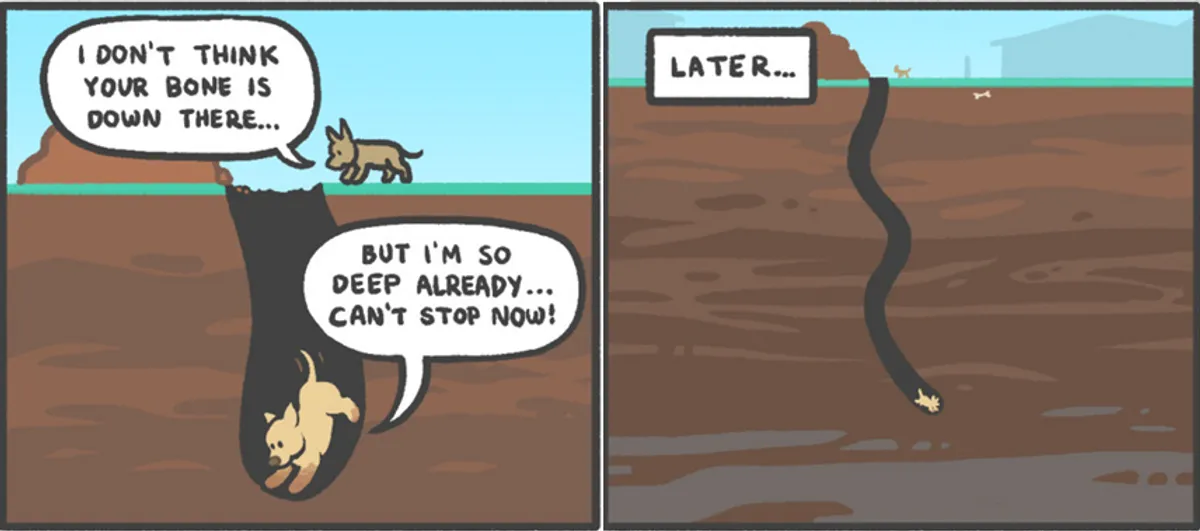
It’s called the sunk cost trap. You’ve spent money on implementation and hours on training in software which is not doing the job under Support at Home.
I can hear you saying –
“We’ve only just implemented our current system.”
“We’ve invested too much time and money to change now.”
“It’s not perfect, but we’re managing.”
“The disruption of moving systems would be too great.”
On the surface, these sound like reasonable excuses but underneath you are subscribing to “sunk cost fallacy” – the tendency to continue investing in a decision simply because you’ve already invested heavily in it—even when all evidence suggests it is no longer delivering value.
The problem is that past investment is gone. It cannot be recovered.
The only question that matters is:
Will continuing with this system deliver the best outcomes in the future?
And to quantify –
How many staff hours are your administration team or care partners spending on processes which must be automated under Support at Home?
Are your staff working overtime to get the job done?
Will they suffer burn out, make errors with the data or worse still, with client care?
Will the only staff who know your workarounds leave your organisation, taking their Excel tricks with them?
Margins are now super thin – and sticking with poor software is costing you more than the licence itself.
Are you one of the providers surveyed on the Enkindle Consulting report on Technology and Digital Capacity, reporting that their Support at Home software is not fit for purpose?
That you are continuing to –
- Export data into spreadsheets.
- Manually reconcile budgets.
- Manipulate reports to produce information managers actually need.
- Significantly intervene to produce client statements.
- Have delayed claiming.
- Spend hours validating data rather than acting on it.
- Change organisational processes to fit the software, instead of the software supporting the organisation.
These workarounds often become so embedded that nobody questions them anymore.
But they come at a significant cost.
In many cases, these hidden costs significantly exceed the annual software subscription itself.
Yet because they are spread across departments and absorbed into day-to-day operations, they rarely appear in technology reviews.
Many providers discover that they’ve built entire processes—and in some cases entire roles—around managing the shortcomings of their technology.
7 days admin time saved every month with VIPS Care
One VIPS Care client recently reported saving the equivalent of seven days of administration time every month after moving from a legacy platform to a system better aligned to the realities of Support at Home.
Not by working harder.
Not by employing more staff.
But by removing manual processes that had simply become accepted as “the way we do things.”
That is the real cost of the sunk cost fallacy.
Not the money already spent.
But the opportunities, efficiencies and improvements that organisations continue to miss because they feel compelled to justify past decisions.
“If we were making this technology decision today, knowing what we know now, would we choose this system again?”
If the answer is no, then perhaps it’s time to stop defending yesterday’s investment and start investing in tomorrow’s outcomes with Support at Home software – VIPS Care